04 / Five sections
Clones
Tetris's falling-block mechanic is simple enough to rebuild from scratch, which is exactly why so many independent developers and hobbyists have built their own versions of it — often as a way to learn a new programming language or game framework. These are seven real, currently-public projects, picked for how differently they approach the same game.
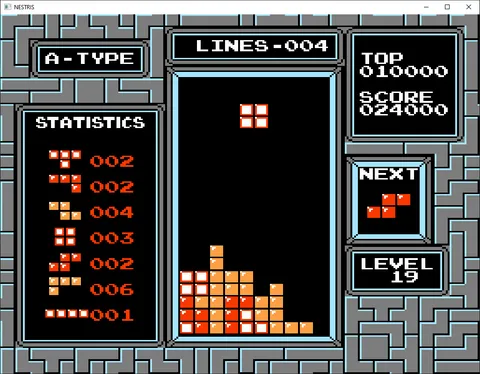
NESTRIS
Aims to be the most accurate NES Tetris clone available — built to match the original's exact drop timing and behavior, the version competitive NES players train on.
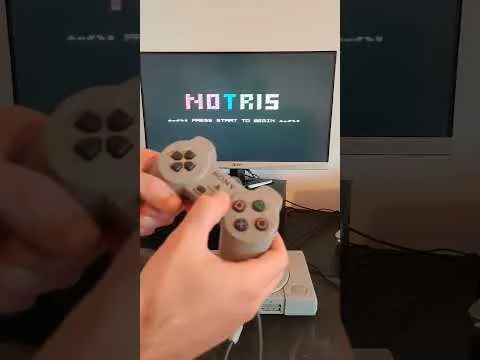
nortis
A Tetris clone for the original PlayStation, built and run on real PS1 hardware — homebrew console development, not an emulator project.
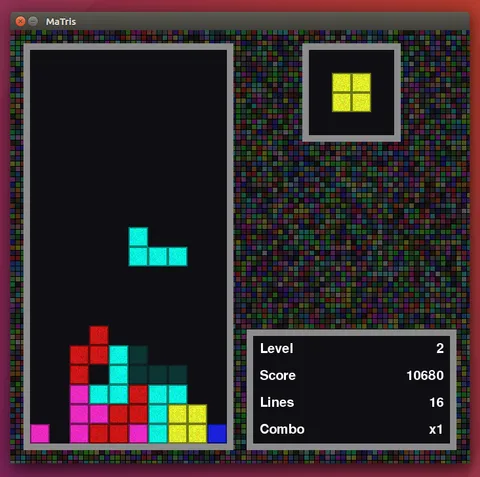
MaTris
A clone built with pygame — one of the more approachable starting points if Python is the language you already know.
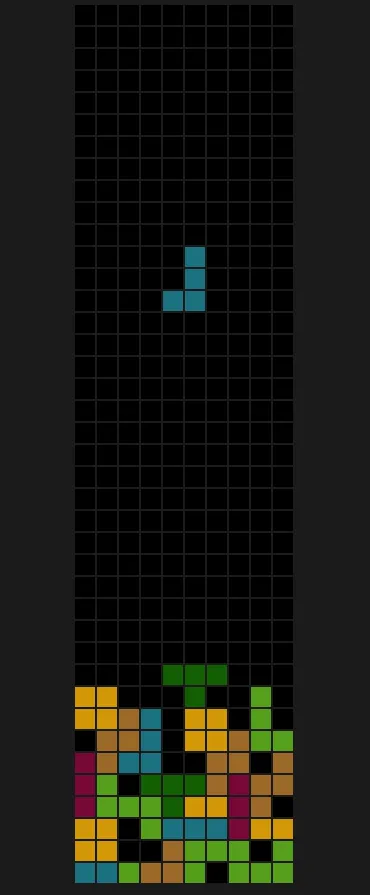
wasm-tetris
Game logic written in Rust, compiled to WebAssembly and run in the browser — a real example of the Rust/WASM toolchain applied to something playable.
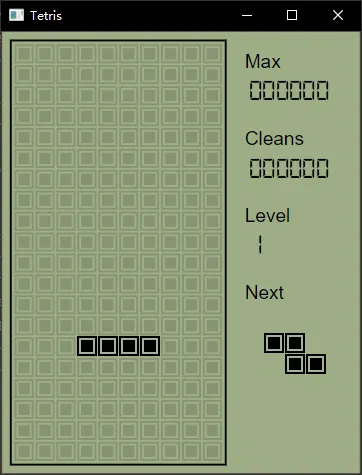
bevy-tetris
Built on Bevy, a data-driven Rust game engine — a good reference for anyone learning Bevy's entity-component-system model on a small, complete project.

tetris-sdl-c
A self-described toy project for learning SDL 2.x in C — closer to the metal than most entries here, and a reasonable template for a first SDL project.
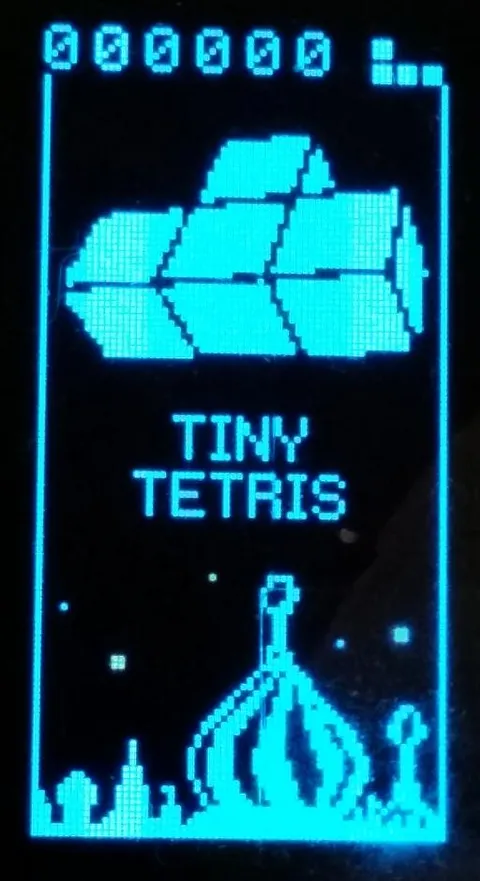
Tiny-Tetris
Runs on an Arduino Nano or Uno with a small OLED display — the whole game compressed onto real embedded hardware, not a screen simulation of one.
Picked for variety, not ranked by quality — an NES-accuracy project, a PS1 homebrew build, a Python starting point, Rust compiled to WebAssembly, a Rust game-engine example, a bare-metal SDL2 project, and one running on actual Arduino hardware. Star counts captured 2026-09-24 and will drift; follow the links for current activity. Broader, unfiltered lists: github.com/topics/tetris-clone and github.com/topics/tetris.
In that same spirit, the site's creator is building an original falling-block puzzle game of their own — more on that soon.